


Every off-season, many golfers spend time dedicated to Speed Training: they follow a program, train consistently, and finally see the numbers jump.
But then the season starts…and they have no plan as to how to progress or continue.
Most golfers make the same mistake:
👉 They stop at clubhead speed.
Speed is just the starting point. If you want to actually turn that speed into distance and performance, here's what comes next.
European Long Drive Champion and Distance Specialist, Luke Curtis, has put together 6 foundational pieces to take your speed gains right to the course and optimize your results. Learn more about Luke here
https://www.instagram.com/p/
Step 1: Move Into Maintenance Mode
Once you've built speed, your goal shifts. You're no longer trying to gain speed — you're trying to retain and access it.
That means:
- 1–2 speed sessions per week
- Touching max speed regularly
- Avoiding burnout from overtraining
Key mindset shift: Don't chase speed. Maintain it.
If you stop training speed entirely, you can lose some of it. But if you keep reminding your body it's there, you'll keep it all season.
How to Implement
The SuperSpeed App has maintenance phases to guide and track your training during the season.
Step 2: Shift Focus to Ball Speed
Clubhead speed is potential. Ball speed is performance.
You hit it farther by delivering speed efficiently. That comes down to:
- Strike location
- Club delivery
You can swing faster than ever, but if you're missing the center, you're leaving distance on the table.
How to Implement
Regularly perform “Ball Speed Application” sessions in the SuperSpeed App and track your driver clubhead speed and distance gains to ensure transfer.
Step 3: Improve Strike Location
If you want instant gains, start here. Centered contact = free distance.
Simple ways to train it:
- Use Strike Spray
- Track your strike pattern
- Build awareness of miss tendencies
The goal isn't perfection. The goal is consistency around the center.
How to Implement
Grab a can of Strike Spray and start learning your contact tendencies with all clubs, including driver.
Step 4: Dial in Club Delivery
This is where speed turns into elite distance.
Focus on:
- Attack angle — Are you optimizing launch conditions?
- Face-to-path — Are you controlling the start line and curve?
- Dynamic loft — Are you delivering the right loft at impact?
Small improvements here create massive gains in carry and total distance.
How to Implement
Visit an experienced club fitter to optimize club and ball data.
Step 5: Optimize Ball Flight
Now you're chasing the right things:
- Ideal launch
- Optimal spin
- Tight dispersion
Because distance without control doesn't help you score.
Distance + control = usable speed.
That's the difference between range speed…and on-course speed.
Step 6: Get Feedback (This Is Critical)
Guessing won't cut it. If you don't know your numbers, you don't know what to fix.
Use:
- Launch monitor data
- Ball speed, spin, launch metrics
- Dispersion patterns
No data = no direction. The fastest way to improve is to measure what matters.
How to Implement
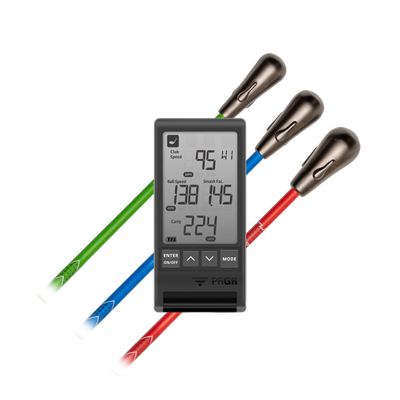
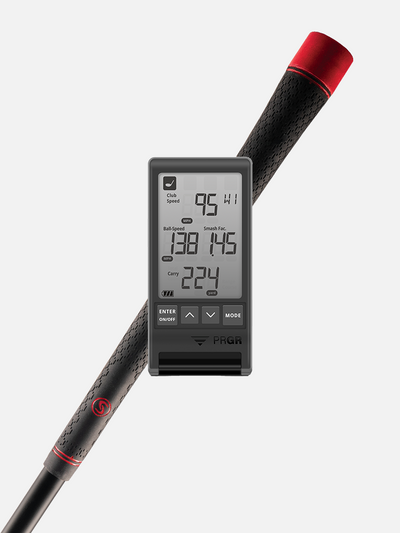
Get on a launch monitor that provides this data. The PRGR will give you a good start if you don't have access to another one with more metrics.
The Bottom Line
Most golfers stop at speed. That's why they never reach their potential on the course.
If you've added speed this offseason, the real work starts now:
- Maintain it
- Deliver it faster into the ball
- Optimize it
That's how you turn training into real distance gains.
Thanks to Luke Curtis for the expertise and inspiration for this blog post.