
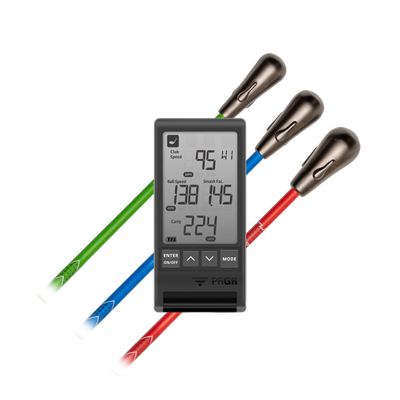


The numbers are in and they should be a wake-up call for every golfer who thinks distance doesn't matter, or that they'll "just get more accurate" as they age.
Arccos Golf, which operates the world's largest on-course golf tracking platform, just released its 2026 Annual Driving Distance Report, an analysis of nearly 10 million driver tee shots from over 37,000 golfers during the 2025 season.
The findings are striking. And they point directly to why training for speed is one of the most important things any golfer can do, at any age.
Distance and Handicap: The Connection Is Undeniable
Here's what the Arccos data makes crystal clear: better golfers hit it farther. It's not a coincidence, it's causal.
Scratch and near-scratch golfers (handicap 0 to 4.9) average 244 yards off the tee. Golfers with a 30+ handicap average just 181 yards. That's a 63-yard gap, and it correlates directly with scoring ability.
Men's Driving Distance by Handicap (All Ages)
| Handicap | Avg. Distance |
|---|---|
| 0.0 to 4.9 | 244 yds |
| 5.0 to 9.9 | 234 yds |
| 10.0 to 14.9 | 223 yds |
| 15.0 to 19.9 | 212 yds |
| 20.0 to 24.9 | 199 yds |
| 25.0 to 29.9 | 194 yds |
| 30+ | 181 yds |
Source: Arccos 2026 Annual Driving Distance Report
Low-handicap golfers are also only about 10 percentage points more accurate in fairways hit than high-handicappers. The real difference, the one that shows up on the scorecard, is distance. Long and occasionally off-line beats short and straight every single time. The data confirms it.
And it gets worse for high-handicap players. Arccos tracked what they call "wayward tee shots," drives that result in a penalty, punch-out, or recovery shot. For scratch golfers, that rate is just 12%. For 30+ handicaps, it's 45%. Nearly half of all drives end up in trouble.
Those extra yards from better players don't just shorten the next shot, they represent far fewer catastrophic misses too.
The Age Cliff: Distance Falls Off a Table After 50
Perhaps the most sobering data in the entire report is what happens to driving distance as golfers age. The decline isn't gradual; it accelerates sharply once you hit your 50s.
Men's Average Driving Distance by Age
| Age Group | Avg. Distance |
|---|---|
| 15 to 19 | 240 yds |
| 20s | 237 yds |
| 30s | 235 yds |
| 40s | 230 yds |
| 50s | 219 yds |
| 60s | 206 yds |
| 70s | 190 yds |
Source: Arccos 2026 Annual Driving Distance Report
Golfers in their 40s have only lost about 10 yards from their teenage peak. But by the 50s, that gap grows to 21 yards. By the 60s it's 34 yards. And by the 70s, golfers are hitting it 50 yards shorter than they did as teenagers, the equivalent of losing an entire short par 4 off the tee.
Women show a similar pattern, losing 43 yards between their 20s and 60s.
The distance drop-off is real. It's measurable. And for the majority of golfers, it happens silently, a yard or two per year, so gradual you barely notice until you're suddenly laying up on holes you used to reach easily.
"But I'll Just Get More Accurate." Not That Simple
One of the most persistent myths in golf is that losing distance is fine because older players compensate with accuracy. The Arccos data partially supports this; players in their 70s do hit more fairways than players in their 20s (56% vs. 38%). Accuracy does improve with age.
But here's the problem: accuracy isn't the equalizer most golfers think it is.
The difference in fairway hit percentage between a scratch golfer and a 30+ handicapper is only about 10 percentage points. But the distance gap is 63 yards. You can't fairway-hit your way out of a 63-yard deficit.
Every extra yard you're shorter means longer clubs into greens, worse approach shot percentages, and ultimately higher scores. And as the data on wayward tee shots shows, better players aren't just more accurate, they're dramatically better at avoiding penalties and recovery situations.
Accuracy and distance together is the winning combination. SuperSpeed training improves both, because a more efficient, well-sequenced swing is simultaneously faster and better controlled.
What SuperSpeed Training Does, Backed by the Same Kind of Data
The Arccos report shows the problem. SuperSpeed Golf has been solving it for thousands of players.
SuperSpeed's overspeed training protocol is built on the science of motor learning and neurological adaptation. By swinging specially weighted training clubs faster than your normal swing speed, you train your nervous system to recruit more muscle fibers, improve sequencing, and raise your ceiling of possible speed. It's the same principle elite athletes in every other sport use, and it works in golf.
The results from SuperSpeed app users with 25+ training sessions speak for themselves:
- 10.7% average speed gained
- 11.1 MPH average swing speed increase
That's not a marginal gain. For most golfers, a 10 MPH increase in swing speed translates to 25 to 30 additional yards of driving distance, enough to move up an entire tier in the Arccos handicap-distance data above.
Why This Matters More As You Age
The Arccos data shows that distance loss accelerates after 50. But that doesn't mean it's inevitable, it means the window to act is now.
Speed is a trained skill. Like strength, flexibility, and endurance, it responds to targeted work. SuperSpeed training has helped golfers in their 50s, 60s, and even 70s not just slow the rate of distance decline, but actually reverse it, gaining yards they hadn't seen in years.
For a 55-year-old golfer hitting 219 yards (the Arccos average for that age group), a 10% gain from SuperSpeed training puts them at 241 yards, right back to where they were in their 30s. Same handicap improvement potential. Same course experience. Same competitive edge.
The Bottom Line
The Arccos 2026 Annual Driving Distance Report confirms what SuperSpeed has always known: distance is the most important variable in amateur golf performance, it declines with age faster than most golfers realize, and it is directly tied to handicap.
The data is the argument. The question is what you're going to do about it.
SuperSpeed training gives you the tools to do something about it, with a proven, science-backed protocol that has helped tens of thousands of golfers gain real, measurable speed.
Your distance doesn't have to decline. Start training today.
Sources: Arccos 2026 Annual Driving Distance Report; Golf Digest, "Shortfall: Latest Arccos distance study shows near-zero growth since 2018 for average golfers" (May 2026); SuperSpeed Golf app user data.

Start Training Today
Train and Track Pro Bundle
- Speed Sticks Pro with the Inertia Matching System
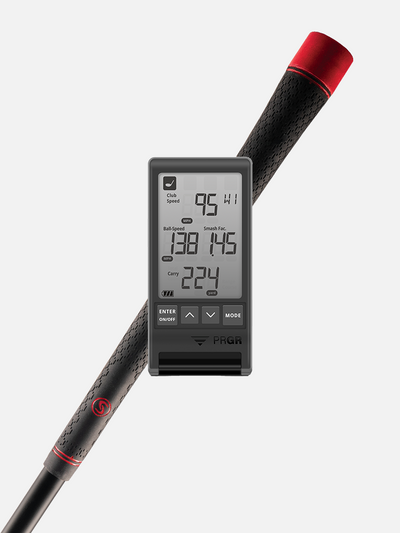
- PRGR Launch Monitor to track every gain
- 60 days of Premium App training included