


There is a new argument being made in the golf speed training space. "Don't swing through the air. Train speed by hitting golf balls."
At first glance, it sounds logical. Golf is played with a golf ball, so shouldn't speed training involve hitting one?
The answer is more nuanced. Hitting balls can be an important part of speed training. In fact, we believe players eventually need to learn how to apply their new speed to an actual golf shot. That doesn't mean the golf ball belongs in every speed training session.
The truth is that pure speed development and speed application are two different parts of the process. When the goal is to discover and maximize how fast your body can move, getting the ball out of the way is often the best place to start.
The Problem With Trying to Hit the Ball and Maximize Speed at the Same Time
Every golfer has a built-in instinct when a ball is sitting in front of them to make solid contact directing the ball towards the intended target.
Even when a player says they're trying to swing as hard as possible, the brain still knows there is a target to hit. This creates a competing objective.
The golfer is trying to:
- Maximize club speed
- Find the center of the face
- Control the clubface
- Control the club path
- Produce a predictable ball flight
Those are a lot of tasks to perform at the same time. For speed development, we want to temporarily simplify the problem. We want to answer one question: How fast can you move?
When you remove the ball, you remove the immediate demand to create optimal impact. This gives the player permission to explore new movement patterns, make more aggressive motions and push beyond the motor program their brain normally uses to hit a consistent golf shot.
Better Players Can Have A Harder Time Gaining Speed
This is one of the most interesting things we've observed over years of working with golfers. Better players are often highly programmed to produce a consistent golf swing. They have spent thousands of hours learning how to return the club to the ball with a predictable clubface, club path and strike location.
While this is a good thing when the goal is playing to shoot the lowest score, it can create a challenge when the goal is discovering maximum speed. A player who is highly skilled at controlling the club may instinctively stay inside the movement patterns that allow them to produce consistent contact. But maximum speed training requires the player to occasionally get outside that familiar box.
The goal is not to create a new bad golf swing. The goal is to explore what faster movement feels like. Removing the ball makes that process easier.
Dry Swing Training Lets You Raise Your Speed Ceiling
Your golf swing has a speed ceiling. When you play golf, you operate somewhere below that ceiling because you need to control the club and produce a functional shot. Speed training is designed to raise that ceiling.
The first step is often allowing the athlete to create maximum intent without being distracted by the outcome of the golf shot. That is where dry swings become incredibly valuable.
They allow the player to:
- Focus completely on speed
- Explore faster movement patterns
- Train with maximum intent
- Discover movements that produce more speed
- Develop confidence moving faster
- Reduce the immediate pressure of producing a perfect golf shot
Then You Have to Learn to Apply the Speed
This is where an important distinction needs to be made. We are not saying that players should only train without a golf ball. Eventually, the new speed has to be applied to the actual golf swing. Once the player has discovered higher levels of speed and becomes comfortable creating them, the next step is learning how to hit the golf ball with that increased speed.
This is the speed application phase where the player is working on combining Maximum speed + a golf ball + an effective strike.
That is a skill that should be developed progressively. The best approach isn't dry swings versus hitting balls. It is dry swings first to develop the maximum speed. Then progressively introduce the golf ball to learn how to apply it.
There Is Also a Legitimate Safety Argument for Separating the Two
There is a major difference between swinging a club freely through the air and swinging a club at maximum speed into a collision. During a dry swing, the club is allowed to continue through the movement. When you introduce a ball, you introduce impact which often isn't perfect.
Golf injury research has repeatedly identified impact-related mechanisms as an important source of hand and wrist injuries. Sudden deceleration when the club strikes the ground, a hard object, or another obstacle can create high loads that are transmitted through the club and into the hands and wrists. Wrist injuries are among the most commonly reported injuries in golf with the lead wrist being particularly vulnerable. This is especially relevant when golfers are training at maximum effort.
The faster the club is moving, the more important it becomes to manage what happens when the club encounters resistance. A clean driver strike may create a relatively small interruption to the club's motion. Golf isn't always a perfectly controlled laboratory environment with centered strikes on every rep.
Golfers hit:
- The ground
- Practice mats
- Tees
- The ball low or high on the face
The golf literature is clear that sudden changes in loading during impact, particularly when the club unexpectedly strikes the ground or another object, can be a mechanism for hand and wrist injuries. This doesn't mean hitting balls during speed training is inherently unsafe. It means that impact adds another variable that needs to be managed.
What About the Lead Wrist and TFCC?
The lead wrist is one of the most vulnerable areas in the golf swing. One structure that can be affected is the triangular fibrocartilage complex, commonly known as the TFCC. The TFCC helps stabilize the wrist and can be injured by a combination of axial loading, rotation and repetitive stress. Golf is one of the sports in which forceful wrist rotation and loading can contribute to these types of injuries. This was in the recent news as it was the injury Jordan Spieth was dealing with for years and finally had surgery to fix.
Other common golf-related wrist problems include ECU tendon injuries, tendinopathy and other soft-tissue injuries. Many of these problems are associated with repetitive loading, poor strike conditions or sudden deceleration of the club. That is another reason why we believe maximum-speed development and maximum-speed ball striking should not necessarily be treated as the same thing.
Hitting Balls Isn't the Enemy
We believe golfers should hit balls as part of the speed development process, but the ball should be introduced at the right time. If a golfer has never experienced higher swing speeds, immediately asking them to hit a golf ball at maximum effort can be overwhelming.
A better progression is:
Phase 1: Develop Pure Speed
Get the ball out of the way. Measure speed and train with max intent. Allow the body to explore faster movement.
Phase 2: Become Comfortable With New Speed
Continue developing the player's ability to move faster while building confidence in the new movement patterns through new drill sequences and increased repetitions over a series of weeks.
Phase 3: Apply Speed to the Golf Ball
Introduce ball striking and teach the player how to use their new speed while producing functional contact.
Phase 4: Transfer It to the Course
Now the player learns how to use more speed when it actually matters.
Speed Development Is Not the Same as Speed Application
This is the biggest misconception in the conversation. Just because golf is played by hitting a golf ball does not mean every speed-training swing should include one.
Baseball players don't take every athletic training rep by trying to hit a pitch. Sprinters don't run every repetition as part of a race. Golfers don't need to hit a ball during every swing designed to improve their maximum speed. The objective of the training determines the drill.
When the objective is pure speed, remove unnecessary constraints and maximize the movement. When the objective is speed application, bring the ball back and learn how to use that speed. Both are important, but they aren't the same thing.
Train Speed the Right Way
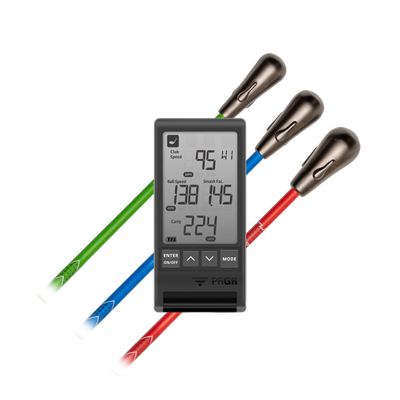
At SuperSpeed, we've spent over a decade helping golfers increase speed using a structured progression. One of our core principles has always been simple: Train maximum speed. Then learn how to apply it. That's why dry swing training is such an important part of the process.
We want players to first discover how fast they can move. Then we want them to build confidence in that new speed. And finally, we want to help them transfer it to a golf ball.
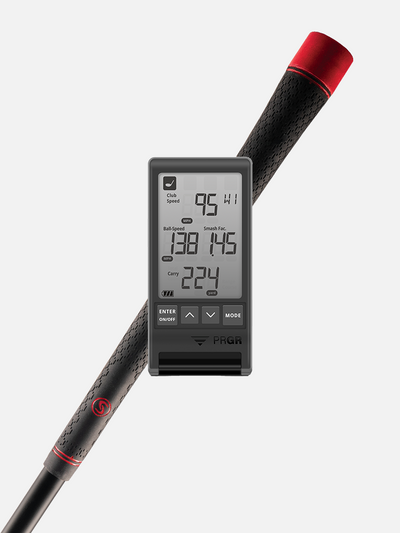
Our ball speed application protocols and SuperSpeed App are designed to walk players through that progression. You don't have to choose between swinging fast and hitting the ball. The best training process does both.
First, raise your ceiling.
Then learn how to use it.