


Golf speed training has become one of the most talked-about areas of performance improvement in the game, and for good reason. In the past decade, the professional tours have seen a dramatic shift toward intentional speed development, with average driving distances increasing by more than 20 yards. This didn't happen because golfers suddenly got bigger or stronger alone. It happened because the training methods got better. This guide covers what golf speed training is, why it works, and how to apply it to your game.
What Is Golf Speed Training?
Golf speed training refers to any training specifically designed to increase swing speed, distinct from general golf fitness, swing mechanics instruction, or flexibility work. The goal is direct: to swing the club faster, which produces higher ball speed, which produces more distance.
Speed training has become a mainstream component of professional golf because of one key insight: swing speed is trainable. It is not a fixed physical attribute. It can be developed systematically, at any age, and the gains are measurable and durable.
The primary method used in professional golf speed training today is overspeed training, a protocol that trains the nervous system to move faster by repeatedly exceeding the body's current speed ceiling. It is the fastest and most effective method for producing swing speed gains, and it is the method this guide focuses on.
Why Golf Speed Training Works
To understand why golf speed training works, you need to understand what actually limits your swing speed. Most golfers assume the limit is physical, such as muscle strength, flexibility, or body type. The actual limiter is neurological.
Your central nervous system maintains a "speed ceiling," an upper limit on how fast it will allow your muscles to contract in sequence during a given movement pattern. This ceiling is a protective mechanism. Your brain has decided, based on your training history, that your current maximum swing speed is as fast as it is safe to go.
The ceiling is almost always set lower than your actual physical capability. You are capable of swinging faster than your nervous system currently permits. The goal of golf speed training is to give your nervous system the evidence it needs to raise that ceiling.
Overspeed training does this by having you swing lighter-than-normal implements at absolute maximum effort. Because the implement is lighter, you swing it faster than your current ceiling allows. Repeated exposure to this higher speed trains your nervous system to accept the new speed as normal, causing the ceiling to rise. When you then swing your real clubs, you can access that new higher speed.
Research on this mechanism consistently shows average swing speed gains of 5 to 8% over a 4 to 6 week training block. This is the most dramatic speed improvement available to golfers in the shortest time frame, and it explains why overspeed training has become the standard at the professional level.
Types of Golf Speed Training
Golf speed training broadly falls into three categories, each targeting the speed equation from a different angle:
Overspeed training: targets the neurological speed ceiling directly. It uses lighter-than-normal implements swung at maximum effort to force nervous system adaptation. It delivers the fastest results, around 5 to 8% gains in 4 to 6 weeks. This is the primary method used by tour professionals and the focus of the SuperSpeed Golf system.
Resistance and strength training: builds the muscular foundation that supports speed development. Heavier-than-normal implements, resistance bands, and gym-based power training all contribute. Results can be slower, but strength gains compound over time and support long-term speed development.
Technique-based speed training: sequencing drills, hip rotation work, lag and wrist mechanics, and ground reaction force training. These optimize how efficiently you transfer existing speed to the ball. They are valuable, but constrained by your existing speed ceiling. They work best in combination with overspeed training, not as a replacement for it.
For most golfers looking for meaningful distance gains in a realistic timeframe, overspeed training is the right starting point. The results are faster, the protocol is simpler, and the neurological adaptation it produces makes subsequent strength and technique work more effective.
What a Golf Speed Training Program Looks Like
The SuperSpeed Golf protocol is the most used overspeed training program in professional and amateur golf. Here is how it works in practice:
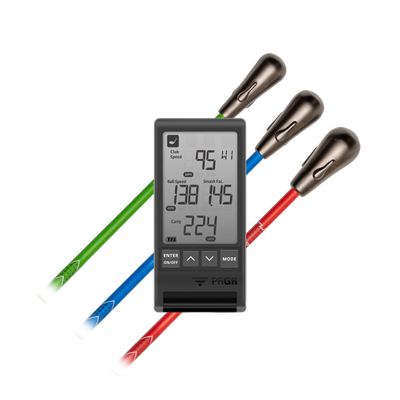
Equipment: three training clubs: a light stick (about 20% lighter than a standard driver), a medium stick (about 10% lighter), and a heavy stick (about 5% heavier). Each trains a different aspect of speed development.
Session structure: 10 to 15 minutes per session. You perform sets with each stick at maximum effort, training both dominant and non-dominant sides. Non-dominant side training is a key differentiator of the SuperSpeed protocol, as it creates neurological balance that significantly amplifies dominant-side speed gains.
Frequency: three times per week with rest days between sessions. The neurological adaptation happens during recovery, not during training. Overtraining during this protocol produces slower results than the prescribed schedule.
Progression: the protocol includes five levels. Level 1 establishes the foundational movement pattern. Each subsequent level increases training demands and builds on the speed developed in prior phases. Most golfers begin to see measurable speed increases within two to three weeks and experience their largest gains between weeks four and six.
How to Choose a Golf Speed Training Aid
The golf training aid market has expanded significantly as speed training has gone mainstream. A few things to look for when evaluating options:
A structured protocol: a training aid is only as good as the protocol that guides your use of it. Look for a program with clear progression, defined session structure, and a physiological rationale for each phase. Without a protocol, you are just swinging a stick.
Research and professional validation: the methods behind the system should be grounded in sports science research, not just marketing claims. Professional adoption at the tour level is a strong signal. When the athletes with the most to gain are using something, it tends to work.
Multi-implement design: a system that trains multiple speeds simultaneously, as the SuperSpeed three-stick system does, produces more complete speed development than single-implement approaches.
The SuperSpeed Speed Sticks Pro meet all three criteria. They are the most widely used golf speed training system in professional golf, built on over a decade of research, and structured around a progressive five-level protocol that has produced consistent results across amateur and professional players since 2014.
What Results to Expect from Golf Speed Training
Based on current research and real-world results across hundreds of thousands of golfers:
Swing speed gains of 5 to 8% are the documented average over a 4 to 6 week training block. In distance terms, that is 12 to 25 yards of added carry depending on starting speed.
First results typically appear within two to three weeks. Most golfers notice something changing in how their swing feels before they see it on a launch monitor. The largest gains come between weeks four and six.
Gains are durable. Once the neurological adaptation occurs, it persists. Golfers who complete a full six-week cycle typically retain 80 to 90% of their speed gains even if they reduce training frequency.
Compliance is the variable. Three sessions per week, every week, for six weeks produces the full gains. Sporadic training produces partial results. The protocol requires minimal time and no gym access. The discipline to show up three times a week is the only meaningful barrier.
How to Get Started with Golf Speed Training
The Speed Sticks Pro are available at superspeedgolf.com and fit all adults and juniors. The free app that guides your training through the full five-level protocol is available on iOS and Android.
A complete protocol guide is available on our site. For a deeper look at the science behind overspeed training and what to expect from the method, that resource is the most complete one available.
Golf speed training is one of the most significant shifts the game has seen in a generation. The methods are proven, the results are consistent, and the barrier to entry is a 10 to 15 minute commitment three times a week. For any golfer who wants to hit it farther, it is the highest-leverage investment you can make in your game.